
Of a First Cast
Early fishing experiences
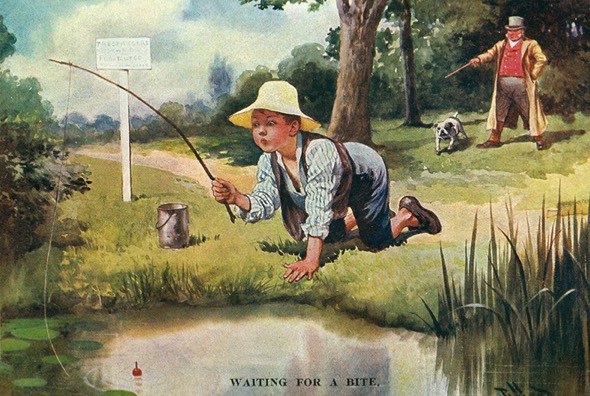
Of a First Cast
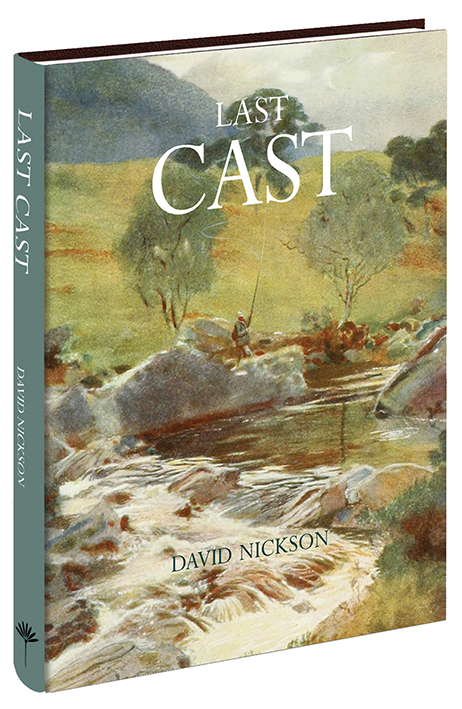
Having just published a book called 'Last Cast' by David Nickson we thought it would be nice to reflect on some anglers' first casts and on the importance of those initial fishing experiences . . .
David’s Nixon's fishing life began on a tributary of the Thames near Windsor (he is now in his nineties and still fishing):
. . . sitting with a bamboo rod and a little float, keenly anticipating a bite from a bleak or gudgeon. Sometimes we chucked in an empty wine bottle with the base knocked out, as a trap for minnows or sticklebacks. Once, a small pike seized the bleak just after it was hooked and I triumphantly hauled both ashore.
Later, I progressed to fishing for chub in the tributary. They were not large by chub standards. I doubt if the biggest I ever caught was much over one pound, but they were very desirable. The bait of choice in the summer proved to be a ripe cherry with the hook inserted where the stone had been carefully extracted before rejoining the two halves of the cherry together. One had to wait patiently till the chub had swallowed the cherry properly before striking.
Then, on a holiday with his grandparents in Wales:
On the Welsh stream near my grandparents’ house, the Afon Roe, a tributary of the Conwy, I had learnt at an early age that a lightning strike at the slightest indication of a check in the cast or a splashy rise was essential for success. This, of course, was the worst possible formula at a later stage for the gentle, stately rise of a chalk stream trout. It took me many years of grief to control my inbuilt boyhood reaction. Few people now remember that before nylon all the casts were of silkworm gut joined by blood knots, which had to be soaked in a cast damper overnight. A 4x cast might stand up to a violent strike with a quarter-pounder but parted all too easily on a heavier fish. On re-reading my fishing diary I am surprised how often I noted that I had been ‘broken again!’
In those innocent happy days, my sister and I would be allowed to wander where we pleased for as long as we liked, down the fields through the farm yard with snappy sheepdogs to the little river. The best pool was below a bridge. One approached it from below, bent double, and tried the tail first, which occasionally produced a small fish. A Greenwell’s Glory was de rigueur on the tail, with probably a Grouse and Claret or a Teal and Green on the dropper. Then, higher up the pool, two streams converged. This was the hot spot where a better fish would lie and perhaps, if one was lucky, a 7- or 8-incher would come flying through the air on to the gravel in response to my violent strike. A 9-incher, weighing perhaps 4oz, was a once-in-a-holiday event. I never caught a 10-incher; that was the stuff of dreams, just as I have never caught a 30lb salmon!
I think one of the most exciting moments in fly fishing is when one approaches a familiar well known lie in a pool that one has fished countless times and where one has had success in the past. This particularly applies to salmon fishing but the excitement of anticipation was learnt for me with little trout in this pool long ago. On one occasion, after a particularly violent strike, a good fish came whizzing over my head, came off in mid-air and landed over the lane in a field of standing oats. I crawled about for ages flattening the oats but never found my trout.
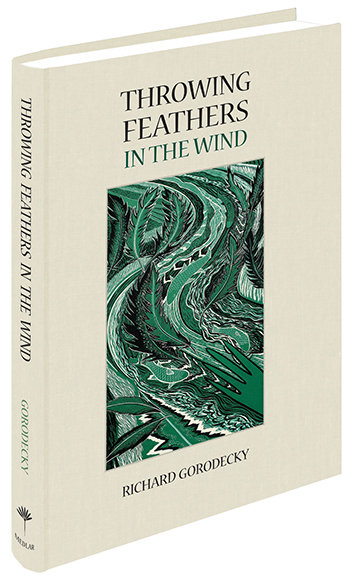
Richard Gorodecky (in Throwing Feathers in the Wind) remembers his magical first forays, in his case in the company of his Uncle Bill in Yorkshire:
He spent much of his time in a shed that I can still remember the smell of. A combination of homemade beer, wood shavings, engine oil, solder and unwashed fishing nets. It smelt to me like adventures had and to be had. Uncle Bill showed me his medals from the army, a metal detector he was fixing and, what to me was the most exciting of all, a tiered toolbox full of fishing tackle. Lures and jigs and flies. Brightly coloured floats and lead weights and hooks of all shapes and sizes. Magical items. Keys to other worlds. I filled each compartment with questions, my enthusiasm was met with enthusiasm and fishing stories were told to wide and wild eyes. He handed me an old copy of the Angler’s Mail, which I held like a signed first-edition of the Old Testament.
Later, as we all sat together in the garden, I bonded with Jack Spencer’s Huge Roach Catch on page nine while everyone else bonded as a family . . . Uncle Bill asked who’d like to go to the trout farm. My brother would stay and hang out with our cool cousin, Alison. She was his age and had yellow dungarees. But she didn’t have gills, so I went with Uncle Bill . . .
I could hear the stream long before I could see it, like the sound of a distant wind chime made of tiny shards of glass. As we descended the steep wooded valley, the sound descended into a deep gargle. The waters I knew were still, mute, murky and secretive. And here it was all liquid light that sang and danced. The stream was not one thing; it was everything it could be. There were glides, shallows, riffles and pools. Hypnotically complex, I tried to take it all in. My uncle watched me with curiosity but did not interrupt me or urge me on. This was a gift to unwrap slowly.
Uncle Bill took out a tobacco tin from his bag, its lid perforated with a nail and from it, he removed a worm that had made the mistake of calling Uncle Bill’s compost pile home. I cast the float into the current and watched it bob along, willing a trout would pull it under with all the special powers a child believes they possess, if only they could tap into them. We cast and walked, cast and walked. Uncle Bill asked me if I was enjoying myself, though I wore the answer on my face. “It’s brilliant. It’s the best.” And it was.
. . . sitting with a bamboo rod and a little float, keenly anticipating a bite from a bleak or gudgeon. Sometimes we chucked in an empty wine bottle with the base knocked out, as a trap for minnows or sticklebacks. Once, a small pike seized the bleak just after it was hooked and I triumphantly hauled both ashore.
Later, I progressed to fishing for chub in the tributary. They were not large by chub standards. I doubt if the biggest I ever caught was much over one pound, but they were very desirable. The bait of choice in the summer proved to be a ripe cherry with the hook inserted where the stone had been carefully extracted before rejoining the two halves of the cherry together. One had to wait patiently till the chub had swallowed the cherry properly before striking.
Then, on a holiday with his grandparents in Wales:
On the Welsh stream near my grandparents’ house, the Afon Roe, a tributary of the Conwy, I had learnt at an early age that a lightning strike at the slightest indication of a check in the cast or a splashy rise was essential for success. This, of course, was the worst possible formula at a later stage for the gentle, stately rise of a chalk stream trout. It took me many years of grief to control my inbuilt boyhood reaction. Few people now remember that before nylon all the casts were of silkworm gut joined by blood knots, which had to be soaked in a cast damper overnight. A 4x cast might stand up to a violent strike with a quarter-pounder but parted all too easily on a heavier fish. On re-reading my fishing diary I am surprised how often I noted that I had been ‘broken again!’
In those innocent happy days, my sister and I would be allowed to wander where we pleased for as long as we liked, down the fields through the farm yard with snappy sheepdogs to the little river. The best pool was below a bridge. One approached it from below, bent double, and tried the tail first, which occasionally produced a small fish. A Greenwell’s Glory was de rigueur on the tail, with probably a Grouse and Claret or a Teal and Green on the dropper. Then, higher up the pool, two streams converged. This was the hot spot where a better fish would lie and perhaps, if one was lucky, a 7- or 8-incher would come flying through the air on to the gravel in response to my violent strike. A 9-incher, weighing perhaps 4oz, was a once-in-a-holiday event. I never caught a 10-incher; that was the stuff of dreams, just as I have never caught a 30lb salmon!
I think one of the most exciting moments in fly fishing is when one approaches a familiar well known lie in a pool that one has fished countless times and where one has had success in the past. This particularly applies to salmon fishing but the excitement of anticipation was learnt for me with little trout in this pool long ago. On one occasion, after a particularly violent strike, a good fish came whizzing over my head, came off in mid-air and landed over the lane in a field of standing oats. I crawled about for ages flattening the oats but never found my trout.
Richard Gorodecky (in Throwing Feathers in the Wind) remembers his magical first forays, in his case in the company of his Uncle Bill in Yorkshire:
He spent much of his time in a shed that I can still remember the smell of. A combination of homemade beer, wood shavings, engine oil, solder and unwashed fishing nets. It smelt to me like adventures had and to be had. Uncle Bill showed me his medals from the army, a metal detector he was fixing and, what to me was the most exciting of all, a tiered toolbox full of fishing tackle. Lures and jigs and flies. Brightly coloured floats and lead weights and hooks of all shapes and sizes. Magical items. Keys to other worlds. I filled each compartment with questions, my enthusiasm was met with enthusiasm and fishing stories were told to wide and wild eyes. He handed me an old copy of the Angler’s Mail, which I held like a signed first-edition of the Old Testament.
Later, as we all sat together in the garden, I bonded with Jack Spencer’s Huge Roach Catch on page nine while everyone else bonded as a family . . . Uncle Bill asked who’d like to go to the trout farm. My brother would stay and hang out with our cool cousin, Alison. She was his age and had yellow dungarees. But she didn’t have gills, so I went with Uncle Bill . . .
I could hear the stream long before I could see it, like the sound of a distant wind chime made of tiny shards of glass. As we descended the steep wooded valley, the sound descended into a deep gargle. The waters I knew were still, mute, murky and secretive. And here it was all liquid light that sang and danced. The stream was not one thing; it was everything it could be. There were glides, shallows, riffles and pools. Hypnotically complex, I tried to take it all in. My uncle watched me with curiosity but did not interrupt me or urge me on. This was a gift to unwrap slowly.
Uncle Bill took out a tobacco tin from his bag, its lid perforated with a nail and from it, he removed a worm that had made the mistake of calling Uncle Bill’s compost pile home. I cast the float into the current and watched it bob along, willing a trout would pull it under with all the special powers a child believes they possess, if only they could tap into them. We cast and walked, cast and walked. Uncle Bill asked me if I was enjoying myself, though I wore the answer on my face. “It’s brilliant. It’s the best.” And it was.
Although it was cool in the forest, the day revealed its heat when the stream opened up into a sunlit clearing. A flask and sandwich were laid out, and I ate as fast as possible to return to the river. “The river will still be there after lunch,” Uncle Bill laughed. I nodded, hurriedly folding the rest of the sandwich into my mouth. Bill lay back in the sun and I took off my shoes to wade in the slack water. A weeping willow leaned into the current. If I were a fish, I would live there. I moved slowly across the stream. I watched the willow leaves move erratically in the current like the fingers of crazed child pianists until I was drawn to a shape just below the surface. A trout, close enough to count its spots and the spots within its spots. It moved off to the left to intercept something tasty and then, to my great relief, returned to the same position. The fishing rod lay in the grass by Uncle Bill. In my enthusiasm to get back to the river, I’d left it behind.
I didn’t believe the fish would remain if I waded back for the rod. So I edged closer. Having survived a recent giant trout attack, I was willing to take my chances with this little fish. As cautious as a heron, I bent forward. Ever. So. Slowly. Then reached, inch by inch, into the water, my hands and fingers readied like a Venus flytrap. The fish dropped back in the current, and my hands snapped and closed around it. For a moment, just a moment, I held it. And then it was gone. But in the truest and purest sense, I had caught a fish.
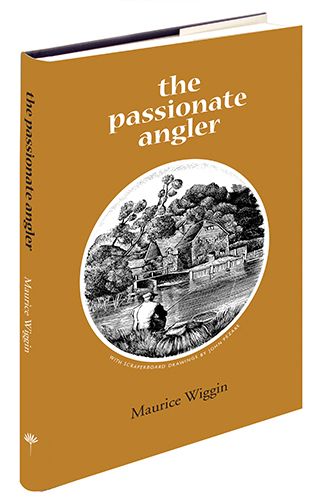
Most first fishing experiences are never forgotten, and here Maurice Wiggin (in The Passionate Angler) remembers even the thrill of a float in a bucket:
I first fished in a bucket, with a garden cane, a piece of cotton, a matchstick for a float, and the hallowed bent pin. There is a snapshot in the family album which charmingly commemorates this great adventure . . . I imagine that the whole secret of the fascination angling has for me, is in that picture: but it is difficult to express in words. Difficult? It is impossible. There is available no rationale of the glorious self-surrender, or if you like, self-deception, of this infant brooding lovingly over a zinc bucket, his intense eyes fixed ravenously on a float which, he well knows, will never dip. I have, I guess, frequently fished in waters as empty and unpromising as that bucket: but at least there has always been the possibility that they might hide a fish. Perhaps that first expedition, fishing in a bucket of tap-water, was the purest adventure of all: an adventure of imagination.
Finally, Patrick Chalmers (in At The Tail of the Weir) remembers, as if from another life, the child he once was, in a boat on a loch, made perfect by his first catch.
When I write the word ‘perch’ I go back to the beginning. And so I expect do other men. For whether we caught him in England or in Scotland, in Thames or in some char-haunted lochan of the hills and the Ice Age, the perch has been the initial fish to ever so many of us.
It seems to me now, that triumph, that first fish of all, is the triumph of someone else in another life than mine. I see a mile of grey water, blue-ruffled by the August wind that comes up easterly out of the far shining North Sea. But it’s a dour land this that lies at the gate of the Highlands. The loch lies among stone dykes and fields of anemic oats. There is a low, green hill, pale grass and black rock, that cocks up in the middle of the landscape. On the skyline lift the fingers of factory chimneys. The shores of the loch are fringed with reed-beds and there the coots sit, rocking, rocking on the leaden ripples. Well out on the water rocks a big green coble. In the same are elder persons; and their rods, that are outboard, make the coble look like to a water-spider whose legs they are. There are two frocked children in the boat, a pug dog, and a big maroon-coloured hot-water can - spout, handle and all. This can is full of live minnows. And the party are perch fishing, for with perch this great water is alive. A hot-water can seems a strange place to put minnows. But is there not the story of the proud parent who came to the verger to arrange for the christening of his first-born on Sunday next?
“Thee can’t have ’un christened Sunday,” said the verger.
“An’ why can’t us?”
“Cos paarson’s goin’ fishin’ come Monday an’ he’s got his minners in t’font.”
A man with reddish whiskers takes a minnow out of the can, he baits a hook, he hands a rod to one of the children, he hands it to myself, I suppose. There is a makeshift float, the cork of a soda-water bottle. The boy clutches the rod till his knuckles show white, pop-eyed he gazes at the float. There is a tug at the brown line, the cork bobs and goes resolutely under. “Yon’s him,” says the man with the whiskers. The rod is jerked in air. Upon the hook kicks a striped, green fish of 8oz with a silver belly and red fins. It is a perch and I am an angler blooded and made perfect. And that was a long time ago.
I didn’t believe the fish would remain if I waded back for the rod. So I edged closer. Having survived a recent giant trout attack, I was willing to take my chances with this little fish. As cautious as a heron, I bent forward. Ever. So. Slowly. Then reached, inch by inch, into the water, my hands and fingers readied like a Venus flytrap. The fish dropped back in the current, and my hands snapped and closed around it. For a moment, just a moment, I held it. And then it was gone. But in the truest and purest sense, I had caught a fish.
Most first fishing experiences are never forgotten, and here Maurice Wiggin (in The Passionate Angler) remembers even the thrill of a float in a bucket:
I first fished in a bucket, with a garden cane, a piece of cotton, a matchstick for a float, and the hallowed bent pin. There is a snapshot in the family album which charmingly commemorates this great adventure . . . I imagine that the whole secret of the fascination angling has for me, is in that picture: but it is difficult to express in words. Difficult? It is impossible. There is available no rationale of the glorious self-surrender, or if you like, self-deception, of this infant brooding lovingly over a zinc bucket, his intense eyes fixed ravenously on a float which, he well knows, will never dip. I have, I guess, frequently fished in waters as empty and unpromising as that bucket: but at least there has always been the possibility that they might hide a fish. Perhaps that first expedition, fishing in a bucket of tap-water, was the purest adventure of all: an adventure of imagination.
Finally, Patrick Chalmers (in At The Tail of the Weir) remembers, as if from another life, the child he once was, in a boat on a loch, made perfect by his first catch.
When I write the word ‘perch’ I go back to the beginning. And so I expect do other men. For whether we caught him in England or in Scotland, in Thames or in some char-haunted lochan of the hills and the Ice Age, the perch has been the initial fish to ever so many of us.
It seems to me now, that triumph, that first fish of all, is the triumph of someone else in another life than mine. I see a mile of grey water, blue-ruffled by the August wind that comes up easterly out of the far shining North Sea. But it’s a dour land this that lies at the gate of the Highlands. The loch lies among stone dykes and fields of anemic oats. There is a low, green hill, pale grass and black rock, that cocks up in the middle of the landscape. On the skyline lift the fingers of factory chimneys. The shores of the loch are fringed with reed-beds and there the coots sit, rocking, rocking on the leaden ripples. Well out on the water rocks a big green coble. In the same are elder persons; and their rods, that are outboard, make the coble look like to a water-spider whose legs they are. There are two frocked children in the boat, a pug dog, and a big maroon-coloured hot-water can - spout, handle and all. This can is full of live minnows. And the party are perch fishing, for with perch this great water is alive. A hot-water can seems a strange place to put minnows. But is there not the story of the proud parent who came to the verger to arrange for the christening of his first-born on Sunday next?
“Thee can’t have ’un christened Sunday,” said the verger.
“An’ why can’t us?”
“Cos paarson’s goin’ fishin’ come Monday an’ he’s got his minners in t’font.”
A man with reddish whiskers takes a minnow out of the can, he baits a hook, he hands a rod to one of the children, he hands it to myself, I suppose. There is a makeshift float, the cork of a soda-water bottle. The boy clutches the rod till his knuckles show white, pop-eyed he gazes at the float. There is a tug at the brown line, the cork bobs and goes resolutely under. “Yon’s him,” says the man with the whiskers. The rod is jerked in air. Upon the hook kicks a striped, green fish of 8oz with a silver belly and red fins. It is a perch and I am an angler blooded and made perfect. And that was a long time ago.
David
Nickson
Richard
Gorodecky
Maurice
Wiggin

Patrick
Chalmers